
If you’ve lived in Florida for any length of time, you know May is when everything starts to shift. The air gets heavier, the pavement heats up quickly, and suddenly the same walk your dog handled just fine a few weeks ago feels like a challenge.
At Leo & Lucky’s here in Manatee County, we begin talking about heat safety early because, in our climate, prevention truly makes all the difference. Every year, we see dogs struggle with overheating, and in many cases, it’s something that could have been avoided with a few simple adjustments.
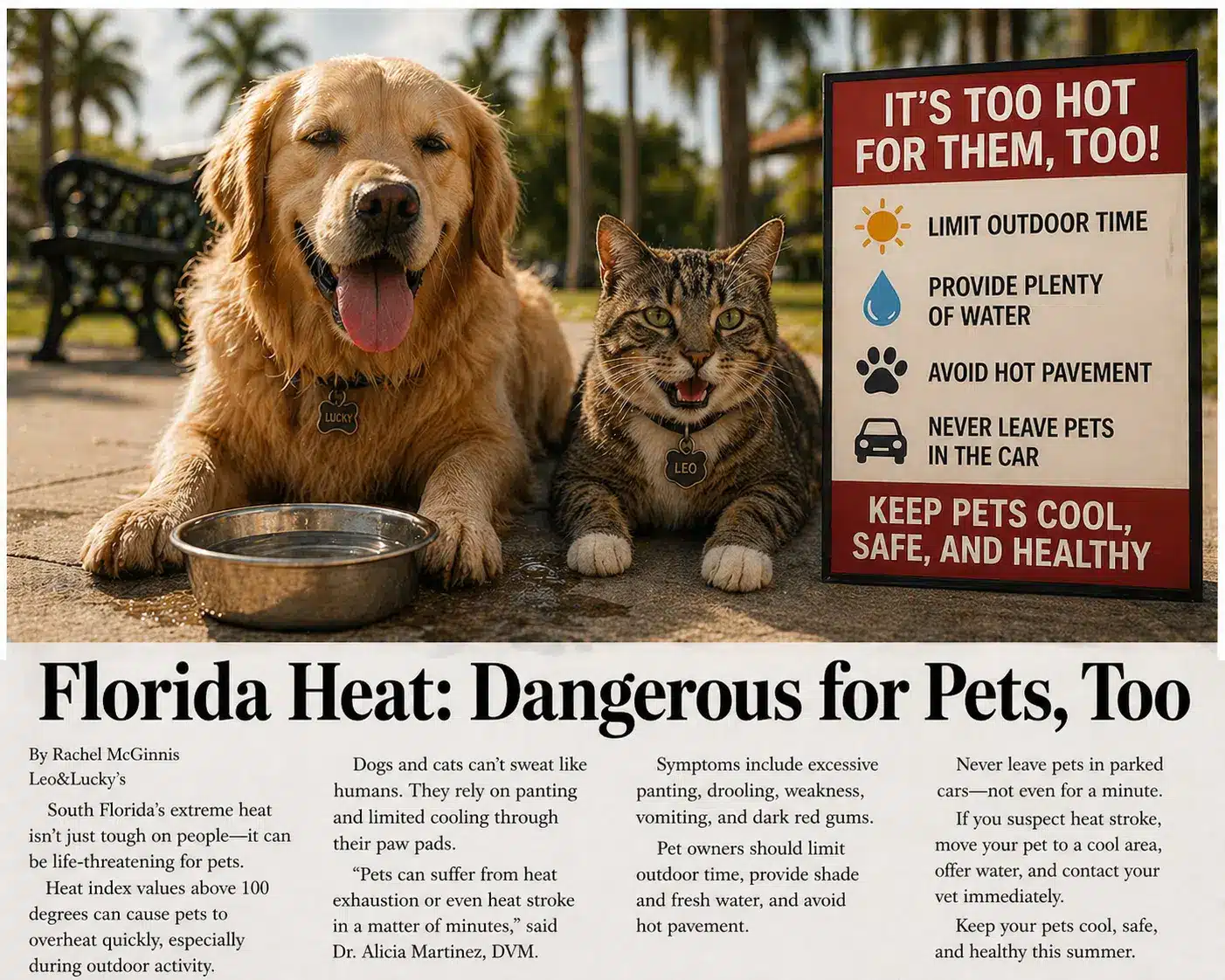
Dogs don’t regulate heat the same way we do. Instead of sweating, they rely primarily on panting, along with a small amount of cooling through their paw pads. When you combine that with Florida’s humidity, it becomes much harder for them to cool themselves efficiently.
Certain dogs are more vulnerable to heat stress, including:
- Flat-faced breeds
- Senior dogs
- Overweight dogs
- Dogs with thick or double coats
Recognizing Early Signs of Overheating
One of the most important things you can do is learn to recognize the early warning signs. Heat stress doesn’t always show up dramatically at first, and catching it early can prevent more serious issues.
Common early signs include:
- Excessive panting
- Slowing down during walks
- Increased drooling
- Seeking shade or lying down frequently
If it progresses, you may see:
- Vomiting
- Disorientation
- Bright red gums
- Lethargy
Hydration Is More Than Just Water
Hydration is one of the most overlooked aspects of heat safety. While access to fresh water is essential, it’s not always enough—especially during Florida’s hotter months.
We often talk with customers about adding hydration through food, which can be more effective for many dogs.
Simple additions can include:
- Goat milk
- Bone broth
- Moist, fresh food toppers
- Water-rich foods where appropriate
In-store favorites include frozen goat milk, shelf-stable broths, and moisture-rich toppers that can easily be added to meals. Many dogs naturally increase their fluid intake when hydration is incorporated into their meals rather than relying on drinking alone.
Adjusting Routines for Warmer Weather
As temperatures rise, it’s not just how long your dog is outside that matters—it’s when.
In Florida, the safest times for activity are:
- Early morning
- Late evening
Midday heat, especially combined with hot pavement, can quickly become uncomfortable or even dangerous. A simple rule of thumb is to place your hand on the pavement—if it’s too hot for you, it’s too hot for your dog’s paws.
Supporting the Body During Heat Stress
Just like we talked about with inflammation last month, what’s happening inside the body plays a role in how well a dog handles external stress.
During warmer months, we often suggest:
- Omega-3 fatty acids
- Light, fresh toppers
- Avoiding overly heavy meals
Ask us about simple supplement options and fresh food additions that support hydration and recovery during the hotter months—many are easy to add without changing your dog’s entire diet.
Simple Cooling Strategies That Work
At home, we often recommend:
- Providing shaded rest areas
- Cooling mats
- Water play
- Wetting paws and bellies
These small, proactive steps can significantly reduce the risk of overheating.
A Prevention-First Approach
Living in Florida means we get to enjoy the outdoors year-round, but it also means we need to adjust how we care for our dogs as the seasons change.
At Leo & Lucky’s, our goal is to offer practical, realistic changes that fit into everyday life. If you’re unsure where to start, we’re always happy to help you create a plan that works for your dog.


