

When a dog or cat starts gaining weight, the advice usually sounds pretty simple: feed less and exercise more. And sometimes, yes, that’s part of the answer. But after years of talking about pet nutrition with customers at Leo & Lucky’s, I can tell you that healthy weight is rarely a conversation I want to reduce to a measuring cup and a calorie count.
There are plenty of reasons a pet’s weight can change. Age, activity level, metabolism, medical conditions, medications and lifestyle can all play a role, and unexplained or sudden weight gain deserves a conversation with your veterinarian. But food is my specialty, so that’s where we’re going to focus—because when it comes to weight management for dogs and cats, calories matter, but there is a lot more happening inside that food bowl than the calorie number printed on the bag.
Not All Calories Tell the Same Nutritional Story
A calorie is a measurement of energy. It tells us how much energy a food provides, but it doesn’t tell us everything about what that food provides nutritionally. A 400-calorie bowl built around quality animal protein is very different from a 400-calorie bowl relying heavily on starches and carbohydrates. Protein helps maintain lean muscle, fat provides energy and can contribute to satiety, fiber may help a pet feel satisfied, and digestibility affects how much nutrition the body can actually use.
So when I’m helping someone evaluate food for an overweight dog or cat, I’m not interested only in finding the food with the lowest calorie number. The goal isn’t simply fewer calories. The goal is making better use of the calories we’re feeding.
Feeding Guidelines Are a Starting Point
Take a look at the feeding recommendations on your bag of pet food and you’ll usually find a chart based primarily on body weight. That’s a starting point, not a commandment. That chart doesn’t know your pet’s age, metabolism, body condition, activity level, whether they’re spayed or neutered, or what else they’re eating during the day.
I don’t even have the same calorie needs among the dogs living in my own house. Lucky is my athlete—he’s always ready to go, preferably at full speed. Riptide considers conserving energy a perfectly respectable life choice. No shade, Rippy. It wouldn’t make sense to expect their bodies to require the same amount of fuel simply because they’re both dogs. That’s why one of my favorite rules in pet nutrition is also one of the simplest: feed the pet in front of you.
And then we have the measuring cup. One person’s level cup can be another person’s heaping cup, and those little differences add up when you’re feeding the same food every day. If your pet genuinely needs tighter portion control, a simple kitchen scale can be one of the easiest tools you can use. Weighing food by ounces or grams gives you a much better idea of how much you’re actually feeding.
But before we automatically make that portion smaller, I want to ask another question: Are we feeding the right food for this pet?
Sometimes We Need to Change the Bowl
If you’ve reduced your pet’s food and they’re suddenly acting like they haven’t eaten since 2019, pay attention. Yes, I own Riptide. I understand that some dogs have never encountered a meal they didn’t believe should have been larger. But sometimes a pet genuinely isn’t feeling satisfied by what they’re eating, and continually reducing the portion may not be the best answer.
Instead, it may be worth looking at what’s actually in the bowl. Could the diet benefit from more quality protein or an appropriate fresh food? Would a more digestible food make sense? Could adding moisture or fiber help with satiety? Can we find a food that allows us to feed an appropriate amount while still leaving the pet satisfied? Sometimes we need a smaller bowl, but sometimes we need to change what’s in the bowl.
And while we’re looking at that bowl, we also have to look at everything that happens around it. The dental chew after breakfast, training treats, the piece of cheese hiding medication, a bite from your dinner plate and the biscuit at the bank drive-through all count. I’m a big believer that food is part of enjoying life—for us and for our pets—and I’m certainly not coming to your house to confiscate the treat jar. But those extras still matter.
They also need to fit the size of the pet eating them. Penny shouldn’t get as many treats—or as much of one—as Jasper simply because they’re both standing there waiting for their share. For a small dog or cat, a few extras can represent a much larger percentage of their daily intake than we realize. Sometimes we don’t need to change dinner at all. We just need to figure out what’s happening between breakfast and dinner.
Look at the Pet, Not Just the Scale
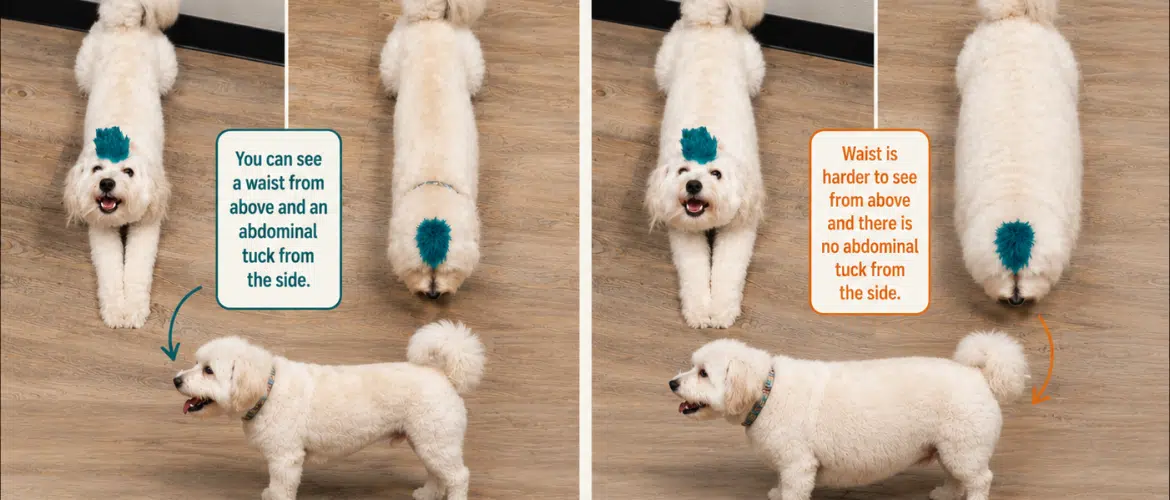
Of course we want to know what our pets weigh, but the number on the scale isn’t the whole story. I also want to know whether you can easily feel the ribs, whether there’s a visible waist when you look down from above, whether there’s an abdominal tuck from the side and, just as importantly, whether your pet is maintaining muscle.
That last piece becomes particularly important as pets get older. A senior pet can lose lean muscle while gaining body fat and end up weighing nearly the same. If we’re celebrating because the number on the scale hasn’t changed, we may completely miss what’s happening underneath all that fur. That’s why I would much rather talk about healthy body condition than spend our lives chasing one magical number. Believe me, I’ve tried.
There also isn’t one perfect weight-management food, calorie count or feeding chart for every dog or cat. Some pets thrive on kibble, while others may benefit from incorporating canned, gently cooked, raw or fresh foods. One pet may need more protein while another benefits from additional fiber or moisture. Some do well with smaller meals throughout the day, and some don’t need a new food at all—they need us to stop pretending those six treats after dinner don’t count.
Feed the Pet in Front of You
Rather than automatically choosing the bag that says “weight management” on the front, look at the whole picture. What is your pet eating now? How much? What does the ingredient panel look like? How active are they? Are they constantly hungry? What treats and chews are they getting? How old are they, and what is their current body condition? Now we’re talking about your pet, not an average pet on a feeding chart.
If your dog or cat has gained a few extra pounds, don’t assume the only answer is feeding less. Look at their body condition, muscle, energy and appetite. Look at the food you’re feeding, how much you’re feeding and everything else that sneaks in during the day. If something doesn’t add up, involve your veterinarian to rule out medical reasons for the change, and then make nutritional adjustments based on the animal standing in front of you.
At Leo & Lucky’s, that’s how we approach pet nutrition. We can help you look at what you’re currently feeding, talk through portions, compare foods and figure out practical changes that make sense for your individual pet. Because good nutrition shouldn’t begin and end with a calorie calculator. Food should do more than fill a bowl. Food should have a purpose.
And sometimes helping a pet reach a healthier weight isn’t about putting less food in the bowl. It’s about taking a better look at what we’re putting in it.


