
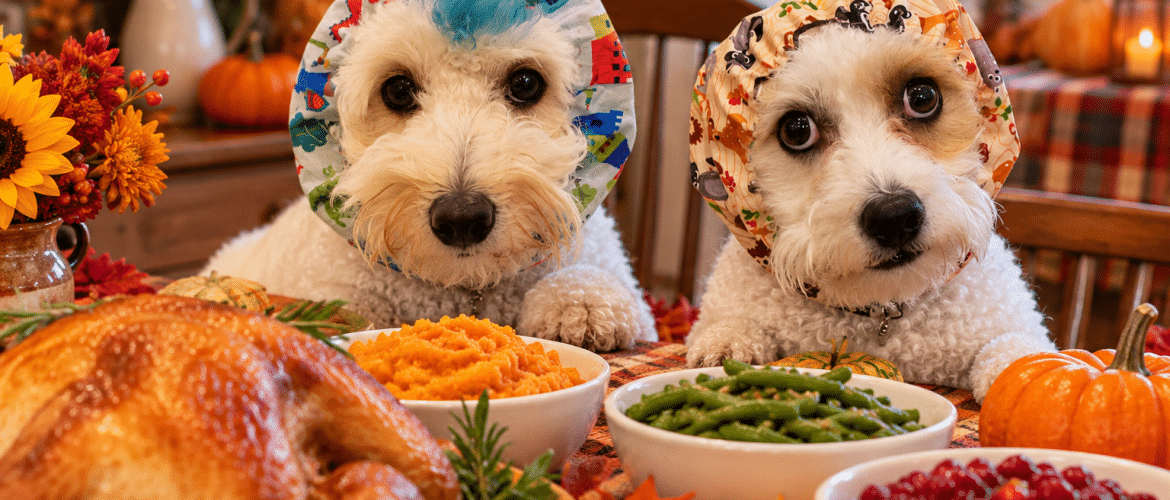
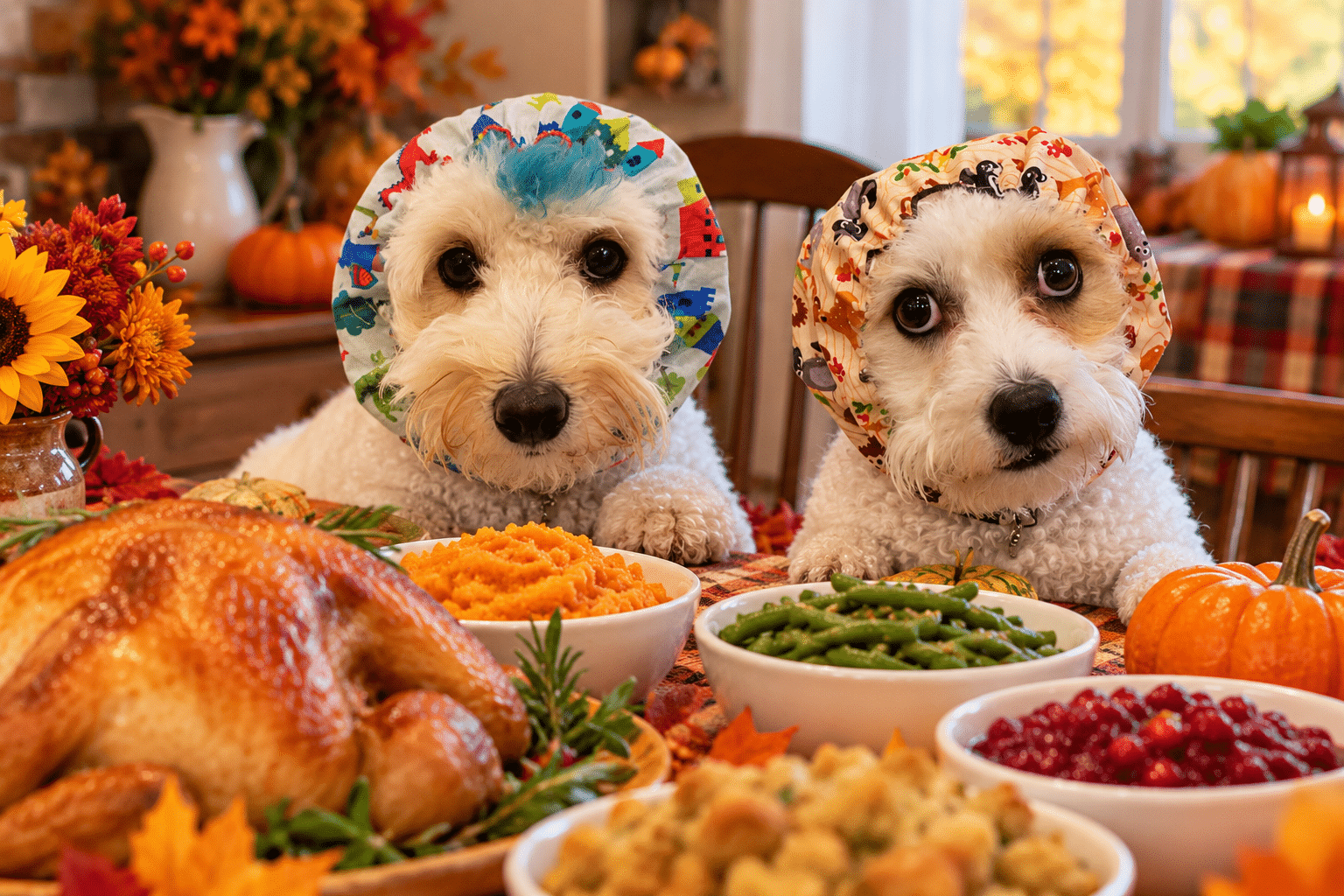
I can hear it now. “Rachel, can my dog have Thanksgiving dinner?” And my answer is probably going to surprise you: Yes. Well… parts of it.
A dog-friendly Thanksgiving dinner is easier than you might think—turkey, pumpkin, sweet potatoes, green beans and carrots. The problem usually isn’t the food. It’s what we humans do to it before it hits the table. So before anyone starts clutching their pearls because I told you to feed your dog Thanksgiving dinner, let’s talk about which Thanksgiving foods dogs can eat, which ones they shouldn’t, and how you can make them a plate without spending Black Friday dealing with an upset stomach—or worse.
Can Dogs Eat Turkey?
Yes. Plain, cooked turkey can absolutely be part of your dog’s Thanksgiving plate. The key word there is plain. Set aside some turkey before it gets covered in butter, gravy or seasoning. For dogs who don’t tolerate rich or fatty foods well, leave off the skin too.
Cooked turkey bones, however, are a hard no. Cooking changes the structure of bone, making it more likely to become brittle and splinter. Cooked bones can create choking hazards or cause serious injuries and blockages in the digestive tract. So turkey meat? Yes. The leftover carcass? Keep that one away from the dog.
Can Dogs Eat Pumpkin?
Pumpkin is another easy yes—with an important distinction. Plain pumpkin and pumpkin pie filling are not the same thing. Plain cooked pumpkin or plain canned pumpkin can be a great addition to a dog’s bowl. Pumpkin pie filling, on the other hand, may contain sugar, spices and other ingredients your dog simply doesn’t need.
This is a theme you’re going to notice throughout Thanksgiving dinner. The original ingredient may be perfectly dog-friendly, while the finished dish is another story.
What About Sweet Potatoes, Green Beans and Carrots?
Yes, yes and yes. Plain sweet potatoes, green beans and carrots are all foods I’m perfectly happy seeing on a dog’s plate. A few plain cranberries can make the cut too. But here’s where Thanksgiving gets us into trouble: we rarely serve these foods plain.
We take a perfectly good sweet potato and add butter, brown sugar and marshmallows. Green beans get buried under cream sauce and fried onions. Cranberries become a sugary sauce. Then we look at the finished dish and wonder whether the dog can have some. The ingredient and the finished Thanksgiving dish are two very different things. When in doubt, think about what the food looked like before we turned it into Thanksgiving dinner.
Thanksgiving Foods Dogs Should Not Eat
Some foods aren’t simply “too rich” or likely to cause an upset stomach. There are ingredients commonly found around the Thanksgiving table that dogs should not eat. Onions are one of the big ones because they’re hiding everywhere this time of year—stuffing, gravy, casseroles, seasoning blends and side dishes. Grapes and raisins are another definite no, along with chocolate, xylitol (sometimes called birch sugar), alcohol and macadamia nuts.
Raw yeast dough is another one people don’t always think about. A dog’s stomach provides a warm environment where the dough can continue to rise and ferment, which can cause dangerous expansion in the stomach while also producing alcohol.
Something doesn’t have to be toxic to make your dog miserable, either. Very rich or fatty foods can cause vomiting and diarrhea and may contribute to pancreatitis. Turkey skin, buttery sides, fatty scraps and gravy aren’t how I’d choose to let the dog celebrate.
Can Dogs Eat Stuffing and Gravy?
These are two Thanksgiving staples I’d leave on the human plate. It’s not necessarily because every ingredient in stuffing or gravy is bad for dogs. The problem is that recipes vary tremendously, and both commonly contain ingredients such as onions, lots of fat, salt, seasonings and other additions we don’t need to put into the dog’s bowl.
This is also one of those times when picking around an ingredient isn’t a great plan. If the stuffing contains onions, don’t pick out the visible pieces and hand the rest to the dog. Give him something else. There is plenty of food in that kitchen that you already know is safe.
Safe Doesn’t Mean Unlimited
Now we get to the part nobody thinks about until after dinner. Grandma already gave him some turkey. Dad slipped him a bite of sweet potato. One of the kids has been quietly handing him green beans under the table for the last 20 minutes. Then Uncle Bob says, “Oh, come on. It’s Thanksgiving!” and gives him another piece of turkey. Meanwhile, every single person thinks they gave the dog “just a little.”
Your dog has now had Thanksgiving dinner six times.
And if you have a dog anything like mine, he has somehow convinced every person at the table that he hasn’t eaten in three days. Even perfectly dog-friendly foods can cause stomach upset when a dog suddenly eats a large amount of something different from his normal diet, and those little bites add up—especially for a smaller dog. So yes, share, but remember that everyone else’s little bite counts too.
How to Make a Dog-Friendly Thanksgiving Plate
Here’s probably the easiest Thanksgiving hack I can give you: make your dog’s plate first. You don’t need to cook a separate Thanksgiving dinner for the dog. Just steal from your own ingredients before you finish preparing them.
Set aside some plain turkey before you add the gravy or extra seasoning. Grab some green beans before they become casserole. Save a spoonful of plain sweet potato before the butter, sugar and marshmallows come out. If you’re cooking carrots or pumpkin, set a little of those aside too. Now you have a simple Thanksgiving plate made from the same real foods everyone else is eating—without having to guess what’s buried in a casserole later.
How much belongs on that plate depends on the dog. A 10-pound dog and a 90-pound dog obviously shouldn’t get the same Thanksgiving serving, and a dog with medical conditions or a history of digestive problems may need to stick much closer to his regular diet. Thanksgiving isn’t the day to see how many new foods your dog’s digestive system can handle at once.
What If My Dog Already Ate Something He Shouldn’t?
First, figure out what your dog ate, approximately how much and when. The ingredient, amount eaten and size of your dog can all matter. If your dog ate something potentially toxic—such as onions, grapes or raisins, chocolate, xylitol, alcohol or raw yeast dough—or swallowed cooked bones, don’t wait for symptoms to appear before deciding whether it’s a problem. Contact your veterinarian, an emergency veterinary hospital or a pet poison-control service for guidance.
Keep these numbers somewhere handy for both dogs and cats: the ASPCA Animal Poison Control Center at 888-426-4435 and the Pet Poison Helpline at 855-764-7661. Both are available 24 hours a day, and consultation fees may apply.
If your pet is showing concerning symptoms after getting into something they shouldn’t—repeated vomiting, significant lethargy, abdominal pain or swelling, difficulty breathing, collapse, tremors or other unusual behavior—seek veterinary care promptly. I’d much rather have you make an unnecessary phone call than spend the evening wondering whether you should have made one.
A Little Planning Goes a Long Way
Thanksgiving doesn’t have to mean feeding your dog absolutely nothing from the table, and it certainly doesn’t mean letting him eat everything on it. There are plenty of foods on a traditional Thanksgiving menu that can be shared when they’re kept simple. The trick is getting to them before we turn them into our food.
Make the dog’s plate while you’re cooking and put it aside. Then, when those big brown eyes start making the rounds at dinner, everyone knows there’s already something special waiting for him. No means no, Riptide.
There’s plenty of good food in that kitchen.
Feed the dog in front of you—and maybe make his plate before Grandma gets to him.


